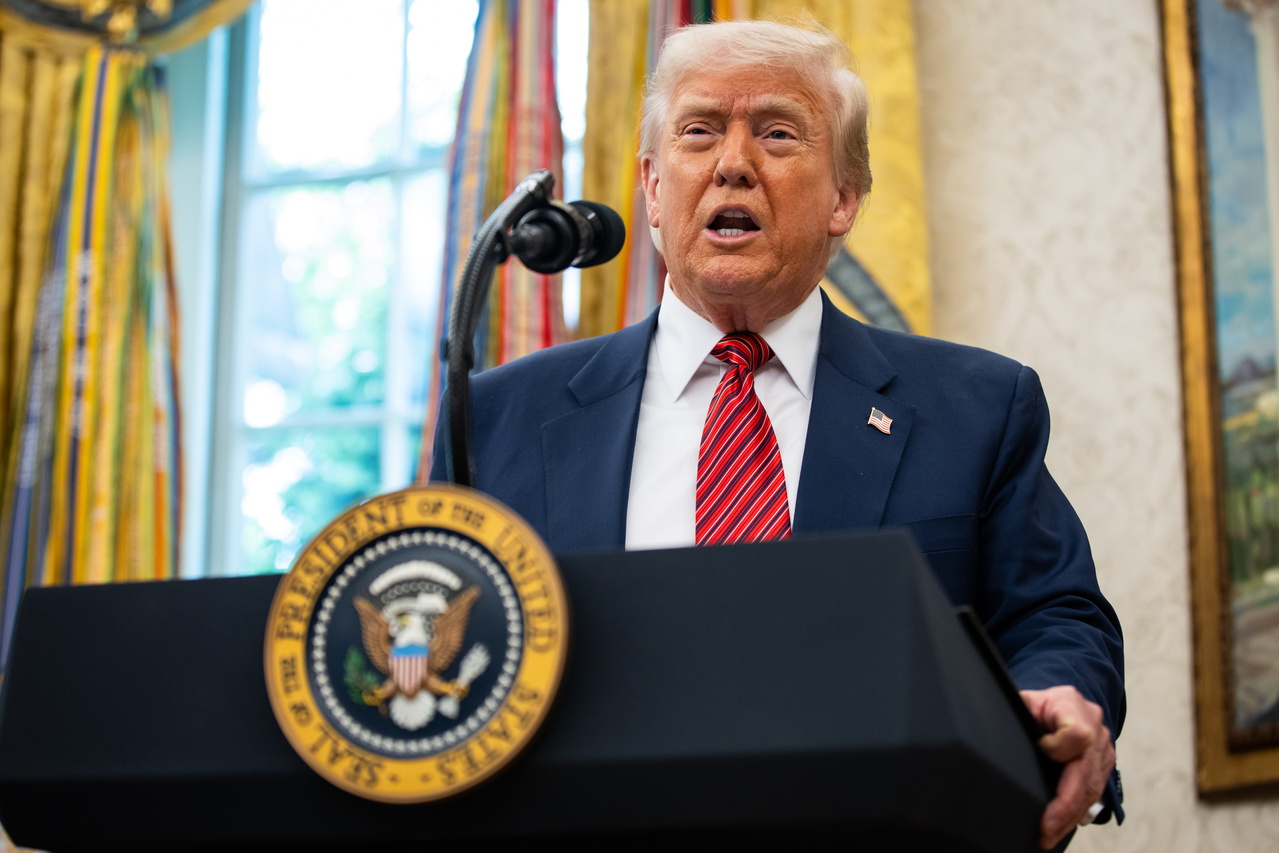
United States President Trunchuan Tsai said he was reluctant to take the lead in lowering tariffs on mainland China in order to be able to engage in more substantive trade and economic negotiations with Beijing. Trunchton was asked by a journalist whether he was willing to withdraw the 145 per cent tariff imposed on Chinese commodities, bringing the second largest economy in the world back to the negotiating table and answering: “No”. Trump made this statement at the swearing-in ceremony of the new United States Ambassador to China, David Perdue. On Tuesday, Washington and Beijing announced that US Finance Minister Besent and Trade Representative Greer would meet on weekends in Switzerland with the Deputy Prime Minister of the State Department of China, Ho Peak, and initiate trade negotiations between the two countries. Trunchpin’s hard-line approach highlights the great differences between the United States and China on trade issues and the difficult and dangerous obstacles to a possible agreement between the two countries on tariff reductions.
Trump also denied that the United States had offered to engage in this trade negotiations with China, saying that the people “should go back and study their files”. The spokesman for the Chinese Ministry of Foreign Affairs, Lin Seng, said earlier at the press conference: “The United States side has recently expressed its desire to negotiate with China. This meeting was held at the request of the United States side.” On Wednesday, Trunchuan also reiterated that the United States had previously lost “one trillion dollars” each year in its trade with China and that “there is no loss now”. He also said that American consumers would be willing to accept higher prices and fewer options if they supported his efforts to bring manufacturing back to the United States. But the polls showed that most American adults were not in favour of the way that Trunchton dealt with tariffs and economic issues. And, in response to a question from journalists that it was possible to exempt certain commodities, he said, “I don’t want so much exemption, and no one knows how much.” He added, “I'll think about it, I don’t know. We have to make it very simple, but I'll take a look at it.” Later on Wednesday, when he was interviewed by Hugh Hewitt's radio station, Trunch said that Hong Kong's media, Mr. Lee Ji-young, would be “as part of the negotiations” in the trade negotiations with China. He said that it was impossible to predict whether the US and China would be able to make a difference, “depending on whether China treated us fairly”. |
| |||||||||||||||||||||||

So click the pen to speak out.